Manna, capital, interest

1

Posted by Jay Dampier | Posted in Environment | Posted on 05-03-2009

Tags: , , ,

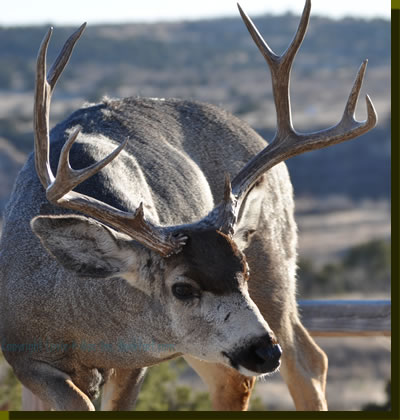
Source: flickr.com, Michael Holden

God communicates an important principle to the nation of Israel. While the Israelites wandered in the wilderness, God miraculously provides provisions for them. As God provides, he places an important limitation. The Israelites must not take more than they need for that day. It’s like God is saying, “You need to rely on me. You mustn’t forget who is providing for you.” The Israelites follow their emerging pattern of disobedience found throughout the Torah. They disobey God’s edict not to be pack-rats and find out the hard way the results of their disobedience.

I think this principle – taking only what you need, taking only what God permits – is a good principle. From this story, I get the sense that God doesn’t want people to be greedy. A principle that naturally can lead to more sustainable consumption; taking only what we need.

Jesus’ teachings echo this principle as well. Jesus tells the story of a rich man who was enamored with collecting more and more stuff. Little does the rich man know that his accumulations are in vane, as his life will be taken from him.

In financial terms, capital can be described as any source of profit while interest can be described as a sum paid or charged for the use or borrowing of money (or perhaps capital – I know I am stretching this a bit).

Why is it so hard for us to not live only on the interest of nature’s bounty. In the 1990s we saw Canadian Atlantic fish stocks crash. We were dipping into nature’s capital, not nature’s interest. As we gobbled up the capital of the cod fish stocks, our actions caused what some call a negative a cascading effect.

Can I be a Christian and still worship a plant?

3

Posted by Jay Dampier | Posted in uhhhh | Posted on 02-12-2008

Tags: , , , , , ,

Oh of course not! If you did, you would definitely go to hell*.

Yesterday, I was walking** through the Thunder Bay Centennial Botantical Conservatory. I had been there numerous times and had never noticed that Thunder Bay has its very own coffee tree. This was very exciting for me.

In the Genesis account God created trees and seed bearing plants on the third day. God saw that the plants were good, and who am I to disagree. I especially agree with God, when it comes to those plants that I have a particularly strong affinity for. I especially like apples (Malus spp.) and coffee (Coffea arabica).

I wonder if God put the coffee tree on the earth with pastors in mind. I have yet to meet a pastor who isn’t borderline addicted to the drink made from Coffea arabica. Doing ministry, studying the Scriptures, counselling people, writing sermons and lessons, practicing prayer, etc. is rarely done without a cup of coffee nearby.

I can quit drinking coffee if I wanted to … really … I just don’t want to.
I bet you heard that one before.

Interestingly, caffeine acts as a natural defence against the coffee plant’s predators, but it looks like that strategy backfired. People figured out that we could pick the “beans,” roast ‘em and grind them up, then run hot water through the grinds, then after our hard work, drink the remaining liquid.

Scriptures are clear that we should have no false gods before us. I wonder if our love for coffee approaches worshiping a false god. Would God may make an exception in this one case?

* You won’t really go to hell. That was a joke.
** OK, actually I was playing hide and seek with my three year old daughter.

On a shady note: Some folks know that it is more ethical to purchase shade coffee rather than errr… non-shade coffee, but don’t know why. Coffee trees don’t grow very tall, are very shade tolerant and naturally found in the understory of forests. Shade coffee is generally grown in a more naturalized setting which sustains higher biodiversity. Compare that to areas where natural forests have been cut to make way for coffee plantations which support less biodiversity and require more human inputs such as fertilizer and chemical controls.
